The Great Wildebeest Migration 2026
- Home
- »
- Mount Kilimanjaro
- »
- The Great Wildebeest Migration 2026
A Complete Month-by-Month Guide with Ahsante Tours
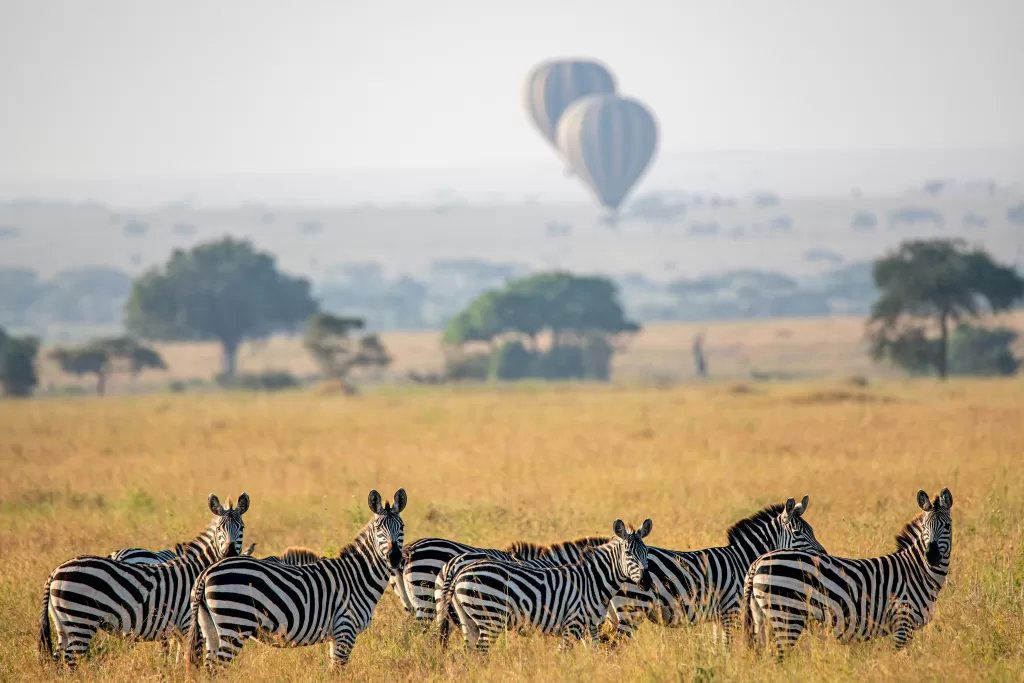
The Great Wildebeest Migration is one of the most extraordinary wildlife spectacles on earth. Over 1.5 million wildebeest, accompanied by hundreds of thousands of zebras and gazelles, move in a continuous cycle across the ecosystems of Serengeti National Park in Tanzania and the Masai Mara National Reserve in Kenya.
Contrary to common belief, the migration is not a single event. It is a year-round natural cycle driven by rainfall, grazing patterns, and survival instincts. Understanding the timing is essential to witnessing the right phase of the journey.
At Ahsante Tours, we guide our clients strategically so they can experience the migration at its most dramatic and meaningful moments.
The Migration Cycle – Month by Month (2026)
January – March
Calving Season | Southern Serengeti
Location: Ndutu & Southern Serengeti Plains
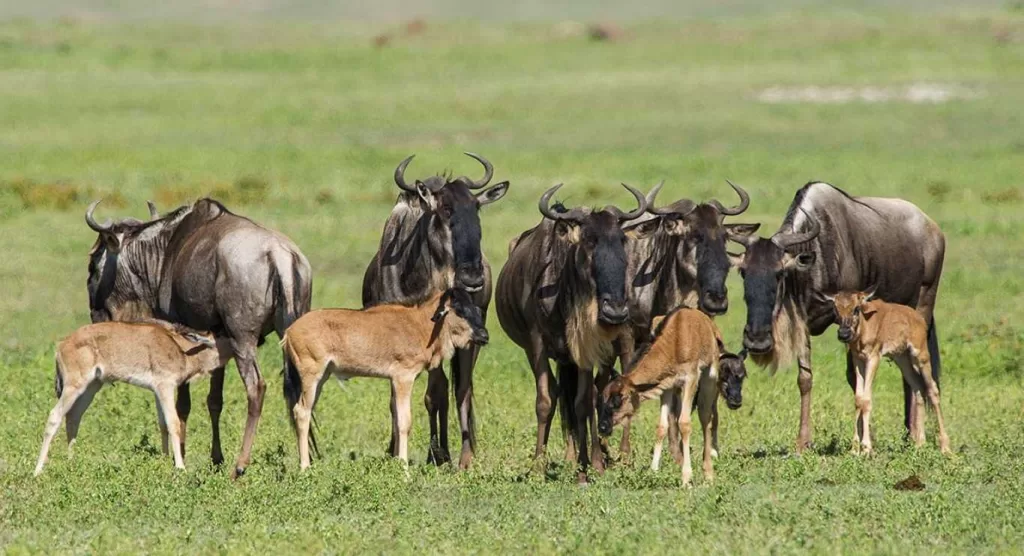
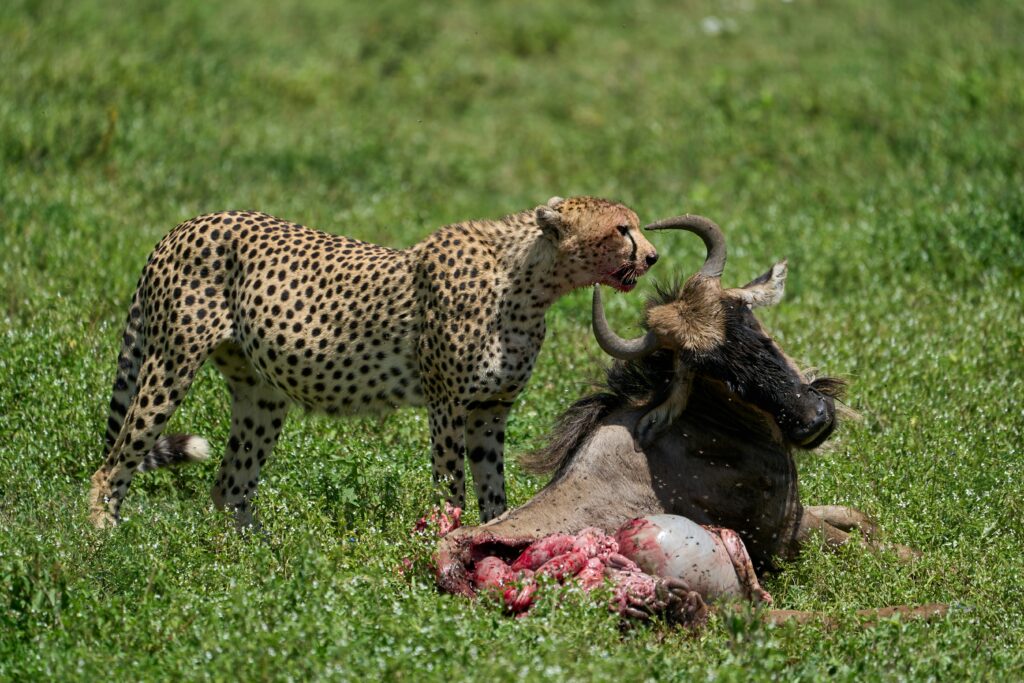
This is one of the most powerful times to visit. Over 8,000 calves are born daily during peak weeks. The plains are rich with fresh grass, attracting predators such as lions, cheetahs, and hyenas.
Why it’s important:
- Incredible predator action
- Baby wildebeest learning to stand within minutes
- Dramatic wildlife photography opportunities
- Fewer crowds compared to river crossing season
This is ideal for travelers who want raw wildlife interaction and open landscapes.
January – March
Calving Season | Southern Serengeti
Location: Ndutu & Southern Serengeti Plains
This is one of the most powerful times to visit. Over 8,000 calves are born daily during peak weeks. The plains are rich with fresh grass, attracting predators such as lions, cheetahs, and hyenas.
Why it’s important:
- Incredible predator action
- Baby wildebeest learning to stand within minutes
- Dramatic wildlife photography opportunities
- Fewer crowds compared to river crossing season
This is ideal for travelers who want raw wildlife interaction and open landscapes.
April – May
Transition Through Central Serengeti
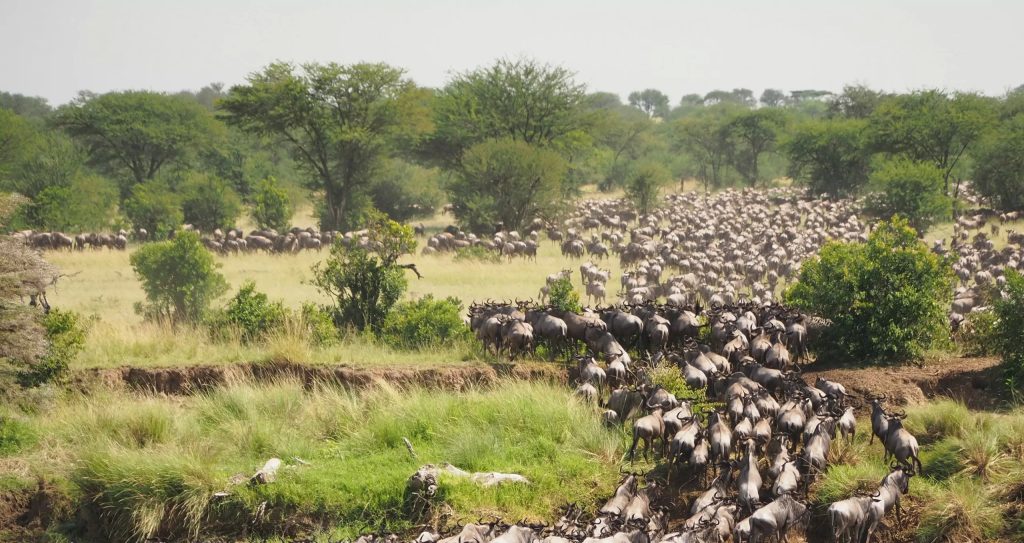
The herds begin moving north as the southern plains dry. This is a quieter, more atmospheric period.
What to expect:
- Long columns of migrating animals
- Dramatic skies and green landscapes
- Lower tourist numbers
- Excellent value travel period
This is perfect for travelers seeking a more intimate safari experience.
June
Western Corridor & Grumeti River CrossingsThe migration gathers momentum as herds approach the Western Corridor and cross the Grumeti River.
Highlights:
- First river crossings
- Crocodile encounters
- Dense herd formations
This is a dramatic build-up to the famous Mara River crossings.
July – September
Northern Serengeti & Mara River Crossings
This is the most famous phase of the migration.
Location: Northern Serengeti
Here, wildebeest must cross the Mara River, where crocodiles wait and currents challenge survival.
Why this period is iconic:
- High-adrenaline river crossings
- Massive herd concentrations
- Peak predator interactions
- Prime wildlife photography season
This is the most requested time and requires early booking.
October
Movement into Masai Mara
Some herds cross into Kenya’s Masai Mara before beginning their return journey.
Game viewing remains exceptional, but crossings may become less predictable.
November – December
Return to Southern Serengeti
With the short rains beginning, fresh grass emerges in the south, drawing the herds back to where the cycle began.
This completes the annual migration loop.
Why Understanding the Migration Cycle Matters
Many travelers ask:
“When is the best time to see the migration?”
The correct answer is:
It depends on what experience you want.
- For newborn wildlife → January–March
- For dramatic crossings → July–September
- For fewer crowds → April–May
- For balanced viewing → June & October
At Ahsante Tours, we tailor itineraries based on your goals, not just the calendar.
Responsible Migration Tourism
The migration is a fragile ecological process. Responsible safari planning ensures:
- Proper vehicle positioning
- Respectful wildlife viewing distances
- Ethical guiding standards
- Environmental preservation
Our professional guides are trained to ensure both client safety and wildlife respect at all times.
Why Travel with Ahsante Tours
Choosing the right operator determines the quality of your migration experience.
With Ahsante Tours, you receive:
- Expert local knowledge of seasonal movements
- Real-time tracking coordination
- Experienced driver-guides
- Strategic camp and lodge selection
- Honest advice on timing and expectations
- Personalized planning support
We do not just take you to the Serengeti.
We position you in the right place at the right time.
Combine Your Migration Safari
Many of our clients combine migration safaris with:
- Mount Kilimanjaro climbing
- Cultural visits near Ngorongoro
- Cycling tours around Kilimanjaro
- Zanzibar beach extensions
This allows you to experience Tanzania fully.
Plan Your 2026 Migration Safari
The Great Migration is dynamic and weather-dependent. Strategic planning ensures:
- Correct location
- Best accommodation zones
- Maximum wildlife exposure
- Seamless logistics

About the author
Vanessa Chuwa
Vanessa Chuwa is a travel writer at Ahsante Tours, sharing inspiring stories about Kilimanjaro, safaris, cycling, and cultural experiences across Tanzania.