How Much Does It Cost to Climb Kilimanjaro?
 By
A Kilimanjaro climb with a licensed, locally based operator usually costs between USD 2,100 and USD 3,000 per person, depending on the route and number of days. Our own prices start at USD 2,140 for the 5-day Marangu route, USD 2,300 for 6 days on Machame, Marangu or Umbwe, USD 2,549 for 7 days on Lemosho or Rongai, and USD 2,897 for the 9-day Northern Circuit, all per person sharing.
You will find cheaper offers online, and much more expensive ones. This guide explains what makes up the price, so you can compare quotes properly and see where a low price usually comes from.
Where the money goes
The largest part of any Kilimanjaro price is fixed costs paid to the Kilimanjaro National Park and the government. Every operator pays the same rates, so they set a floor below which no honest climb can be sold.
Park fees
Kilimanjaro National Park charges each climber per day. The main items are:
- Conservation fee: charged per person per day on the mountain. This is the biggest single item.
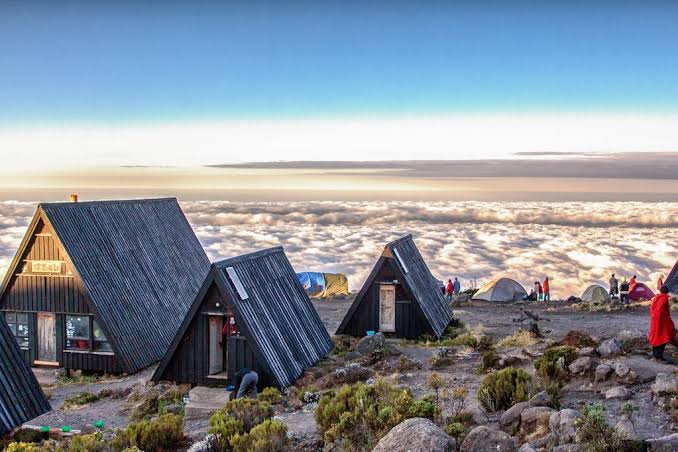
- Camping or hut fee: charged per night. Huts on Marangu cost more than campsites.
- Rescue fee: a one-off charge per climber.
- Crew entry fees: guides, cooks and porters also pay a daily entry fee, which the operator covers.
- VAT: added to park fees.
Together, park fees for one climber on a 7-day route come to well over USD 1,000. Fees are set by Tanzania National Parks and change from time to time, so check the current rates when you compare quotes. Any price that looks close to the park fees alone cannot cover a fairly paid crew, food and equipment.
Crew wages
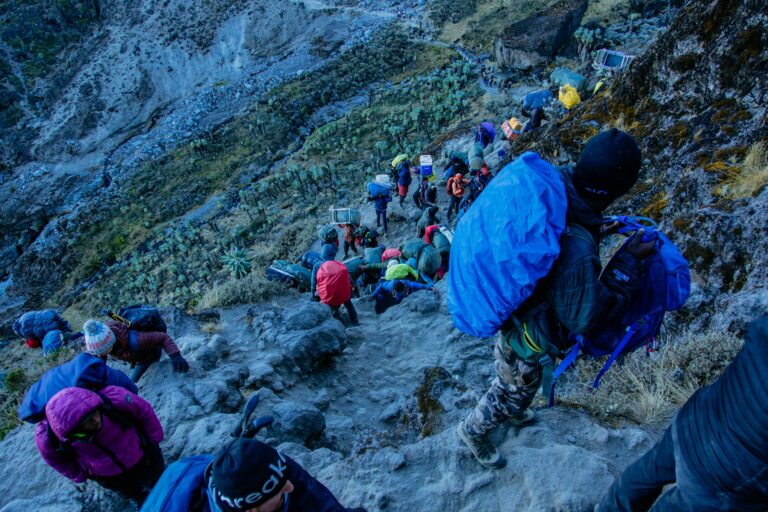
A climb needs a team. For two climbers on a camping route, a typical crew is one lead guide, one assistant guide, a cook and six to eight porters. Porters carry tents, food, water, cooking gear and part of your luggage. Kilimanjaro has a minimum daily wage for porters, and responsible operators pay at least that, plus proper food and warm clothing for the crew.
Low-cost climbs often save money here: underpaid porters, too few staff, or porters carrying more than the 20 kg limit. Ask any operator how many crew will come on your climb and what they are paid.
Food and water
Climbers eat three cooked meals a day, plus snacks and hot drinks. Good food matters at altitude, where appetite drops. Fresh supplies are carried up at the start, and on longer routes some operators resupply mid-climb. Water is collected from streams and treated or boiled.
Equipment
Four-season tents, a mess tent with table and chairs, sleeping mats, a portable toilet tent, oxygen and a first-aid kit all cost money to buy and replace. Pulse oximeters for daily health checks are standard with good operators.
Transfers and hotel nights
Most packages include airport pickup, transport to and from the park gate, and one hotel night before and after the climb. Check what is included: some quotes look cheaper because these are left out.
Why prices vary between routes
The main difference is the number of days. Each extra day adds park fees, crew wages and food. Marangu is slightly different: hut fees are higher than camping fees, but fewer porters are needed because there are no tents to carry.
Some routes also have longer drives to the start gate. Lemosho and the Northern Circuit start on the far western side of the mountain, a drive of about 3 to 4 hours from Moshi, which adds transport cost.
What usually is not included
- International flights to Kilimanjaro International Airport (JRO).
- Tanzania visa. Most nationalities can apply online before travelling.
- Travel insurance that covers trekking to 6,000 m and helicopter evacuation.
- Tips for the crew. Tipping is customary on Kilimanjaro and forms an important part of crew income. Budget roughly USD 250 to 350 per climber, depending on route length and group size.
- Personal gear such as a sleeping bag, boots and warm layers. Most items can be rented in Moshi.
- Drinks and extras at the hotel.
Total budget example
For one person on a 7-day Lemosho climb, a realistic total budget looks like this:
| Item | Approximate cost (USD) |
|---|---|
| Climb package (per person sharing) | 2,549 |
| Crew tips | 250 to 350 |
| Visa | 50 to 100 |
| Travel insurance | 80 to 200 |
| Gear rental (if needed) | 50 to 150 |
| International flights | varies by country |
Group departures and private climbs
Prices per person are lower when you share the climb with others. Our group departures run on fixed dates, and you share guides and camp equipment with other climbers. A private climb, just for you or your own group, costs more per person when you are one or two people, but gives you full control of dates and pace.
If you are travelling alone and want to keep costs down, a group departure is usually the best value. The deposit for group departures is USD 200 per person.
What to ask before booking
- Is the operator licensed by the Tanzania Tourist Board and KINAPA?
- How many guides, cooks and porters will come for your group size?
- Are porters paid at least the park minimum wage and given proper gear?
- What is the guide-to-climber ratio on summit night?
- Is emergency oxygen carried? Are daily health checks done with a pulse oximeter?
- What exactly is included: park fees, hotel nights, transfers, rental items?
A good operator will answer all of these in writing. If the answers are vague, treat the low price with caution.
Is a more expensive climb better?
Not always. International agencies often sell the same climbs run by local operators, with their margin on top. Booking directly with a Tanzanian operator usually gets you the same crew and route at a lower price. What you should avoid is the very bottom of the market, where costs are cut on wages, food and safety.
Our team is based in Moshi, at the foot of the mountain. If you would like a full quote for your dates and group size, send us a message and we will reply with the route, price and exactly what is included.
Frequently asked questions
What is the cheapest way to climb Kilimanjaro?
Joining a group departure on the Marangu or Machame route is usually the lowest-cost option with a licensed operator. Avoid offers that seem close to the park fees alone.
Why are Kilimanjaro park fees so high?
The fees fund conservation, rangers, trail maintenance and rescue services on the mountain. They are set by Tanzania National Parks and apply to every climber.
How much should I tip on Kilimanjaro?
A common range is USD 250 to 350 per climber for the whole crew, depending on the number of days and group size. Your guide will explain how tips are shared.
Do I need to pay a deposit?
Yes. For group departures we take a deposit of USD 200 per person to secure your place. The balance is paid before the climb.
Is solo climbing cheaper?
No. A private climb for one person costs more per person, because the crew and equipment are not shared. A group departure is the better value for solo travellers.
Trips you can book
Articles on Ahsante Tours are written by our team in Moshi and checked by our guides, in line with our Editorial Policy.

Want help planning your trip?
Our team in Moshi plans Kilimanjaro climbs, safaris, cycling tours and Zanzibar stays. Tell us your dates and we will suggest a route and price.