
Marangu Route Guide: The Hut Route Up Kilimanjaro
 By
Marangu is the oldest and best-known route up Kilimanjaro. It is the only route where climbers sleep in huts rather than tents, and the only one that uses the same path for the ascent and descent. People sometimes call it the “Coca-Cola route” because it was once seen as the easy option. In reality, the short version is one of the harder ways to reach the summit, because it gains height quickly.
This guide covers the itinerary, the huts, the success rate and how to decide whether Marangu is right for you.
Route summary
- Days on the mountain: 5 or 6
- Start and finish: Marangu Gate (1,860 m), about 45 minutes from Moshi
- Accommodation: shared huts at Mandara, Horombo and Kibo
- Summit approach: from Kibo Hut via Gilman’s Point to Uhuru Peak
- Price from: USD 2,140 (5 days) and USD 2,300 (6 days) per person sharing
Day by day: 6-day Marangu
Day 1: Marangu Gate to Mandara Hut (2,720 m)
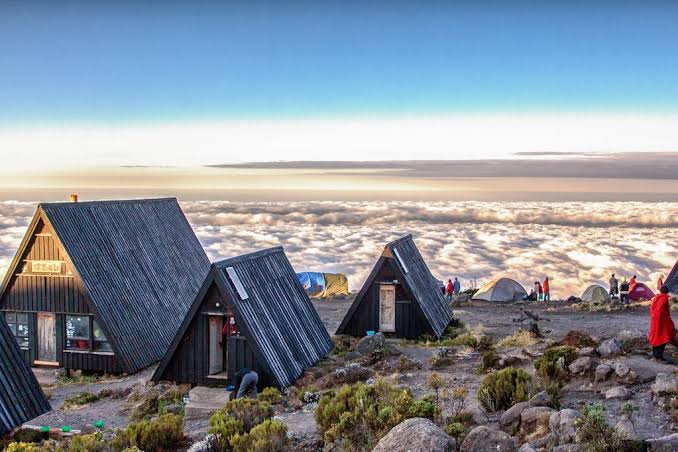
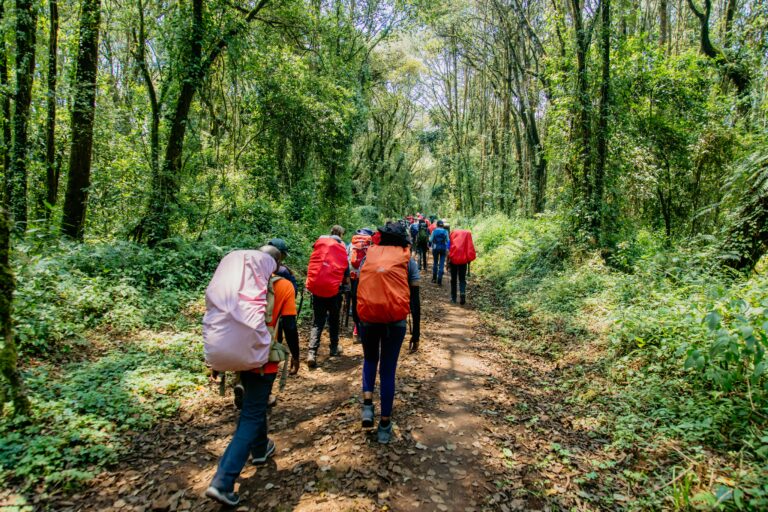
After registration at the gate, you walk 4 to 5 hours through rainforest on a wide path. Blue monkeys and colobus monkeys are often seen. Mandara is a cluster of wooden A-frame huts in a forest clearing. In the afternoon you can walk to the Maundi Crater, a short side trip with views over the plains towards Kenya on a clear day.
Day 2: Mandara to Horombo Hut (3,720 m)
The forest gives way to heath and moorland. Giant groundsels and lobelias appear, along with the first full views of Kibo and Mawenzi. This is a long day of 6 to 7 hours. Horombo is the largest camp on the route and is shared by climbers going up and coming down.
Day 3: Acclimatisation day at Horombo
This is the day that separates the 6-day from the 5-day version. You walk up towards Zebra Rocks or Mawenzi Hut, gaining a few hundred metres, then return to Horombo to sleep. It makes a clear difference to how you feel higher up.
Day 4: Horombo to Kibo Hut (4,720 m)
You cross the Saddle, a wide alpine desert between Mawenzi and Kibo. The landscape is bare, dry and windy. Kibo Hut is a stone building with dormitory rooms. You eat early and rest before the summit attempt.
Day 5: Summit and descent to Horombo
Leaving around midnight, you climb steep switchbacks of loose scree to Gilman’s Point (5,685 m) on the crater rim. This section is hard and slow. From Gilman’s Point, the path follows the rim past Stella Point to Uhuru Peak (5,895 m), about 1.5 to 2 hours more. After photos, you descend to Kibo Hut for a short rest and continue down to Horombo. It is a long day of 12 to 15 hours.
Day 6: Horombo to Marangu Gate
A steady walk down through moorland and forest to the gate, where you collect your summit certificate before driving back to Moshi.
What the huts are like
Mandara and Horombo have small wooden huts with four to six bunk beds and foam mattresses. Kibo Hut has larger dormitory rooms. Huts are shared with other climbers, so you may sleep alongside people from other groups. There are dining huts, flush toilets at the lower camps and solar lighting. Bring a warm sleeping bag; the huts are not heated.
The advantage is shelter from rain and wind, which makes Marangu a popular choice in the wetter months (April, May and November). The disadvantage is less privacy, and snoring in a shared room can affect sleep.
Success rate
The 5-day Marangu has the lowest summit rate of the main routes. The jump from Horombo to Kibo and then to the summit happens fast, with no acclimatisation day. The 6-day version is much better and is the one we recommend. If you have only 5 days, consider climbing Mount Meru first or choosing a different month and route.
Scenery
Marangu passes through all of Kilimanjaro’s climate zones, from rainforest to the arctic summit. Because you return on the same path, you see the same views twice. The Saddle between Mawenzi and Kibo is a highlight and is not crossed on most other routes.
Who should choose Marangu?
- Climbers who prefer a bed in a hut to a tent.
- Travellers climbing in the rainy months, when staying dry matters more.
- People who want the shortest drive from Moshi.
- Climbers who have a little less time and choose the 6-day version.
It is less suited to climbers who want quiet trails, varied scenery on the way down, or the best possible acclimatisation profile. For those, Lemosho or the Northern Circuit are better choices. Rongai, which descends on the Marangu path, is a good middle option.
Packing for Marangu
The packing list is almost the same as for camping routes. You still need a sleeping bag rated to about minus 10 °C, warm layers for summit night, rain gear and good boots. A sleeping bag liner adds warmth and keeps the bag clean in shared huts. Earplugs help in dormitories.
Frequently asked questions
Is Marangu the easiest Kilimanjaro route?
The path is gentle, but the 5-day version gains altitude quickly. Many climbers find it harder than longer routes for that reason.
Are there showers on Marangu?
There are no hot showers. Your crew provides warm water for washing each day.
Can I book a private hut?
Huts are allocated by the park and shared. Private rooms cannot be guaranteed.
Which month is best for Marangu?
The dry months, January to March and June to October, have the best weather. Marangu is also a good option in the wet months because of the hut shelter.
Do I need a sleeping bag on Marangu?
Yes. Huts provide mattresses and pillows, but not bedding.
Trips you can book
Articles on Ahsante Tours are written by our team in Moshi and checked by our guides, in line with our Editorial Policy.

Want help planning your trip?
Our team in Moshi plans Kilimanjaro climbs, safaris, cycling tours and Zanzibar stays. Tell us your dates and we will suggest a route and price.