Lemosho vs Machame: Which Kilimanjaro Route Is Right for You?
 By
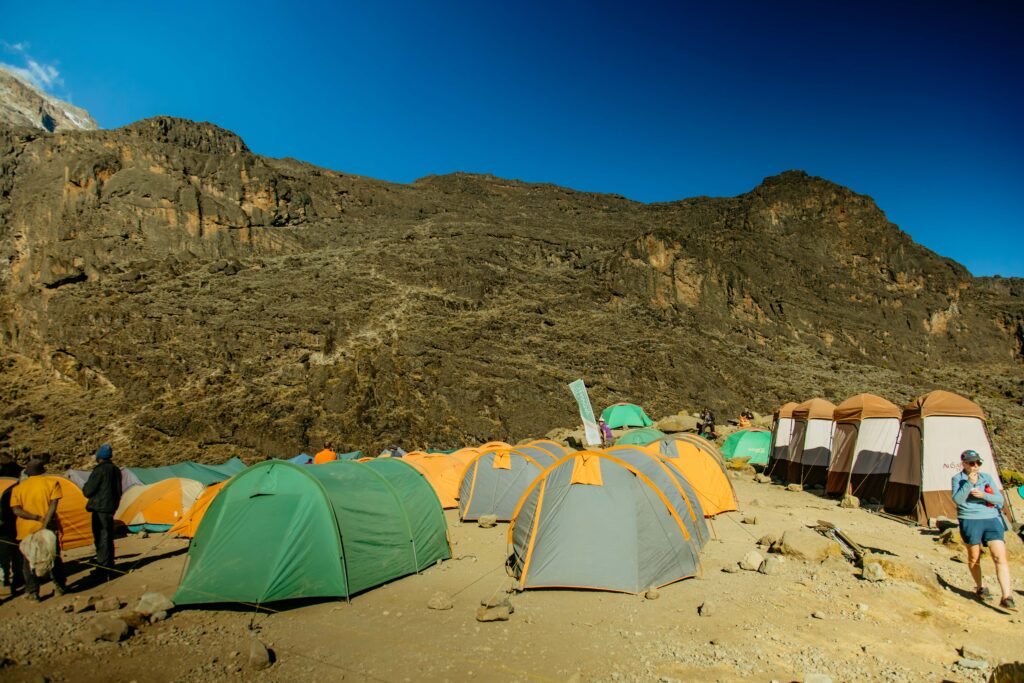
Lemosho and Machame are the two most popular camping routes on Kilimanjaro. They join on the Shira Plateau and share the rest of the way to the summit and back down. The differences are in the first few days: where you start, how crowded it is, and how much time you have to acclimatise.
Both are good routes. This comparison will help you choose based on your time, budget and experience.
At a glance
| Lemosho | Machame | |
|---|---|---|
| Days on the mountain | 7 or 8 | 6 or 7 |
| Start gate | Lemosho Gate (west) | Machame Gate (south) |
| Drive from Moshi | 3 to 4 hours | About 1 hour |
| Distance | About 70 km | About 62 km |
| Crowds | Quiet first 2 to 3 days | Busy from day one |
| Our summit rate | 95% | Slightly lower on 6 days |
| Price from (per person) | USD 2,549 (7 days) | USD 2,300 (6 days) |
| Descent | Mweka Gate | Mweka Gate |
The first days: where the routes differ
Lemosho
Lemosho starts on the western side of the mountain after a longer drive through farmland and forest. Day one is a short walk through rainforest to Lemosho Glades or Big Tree Camp (around 2,780 m). Few groups use this start, so the forest is quiet, and there is a chance of seeing colobus monkeys.
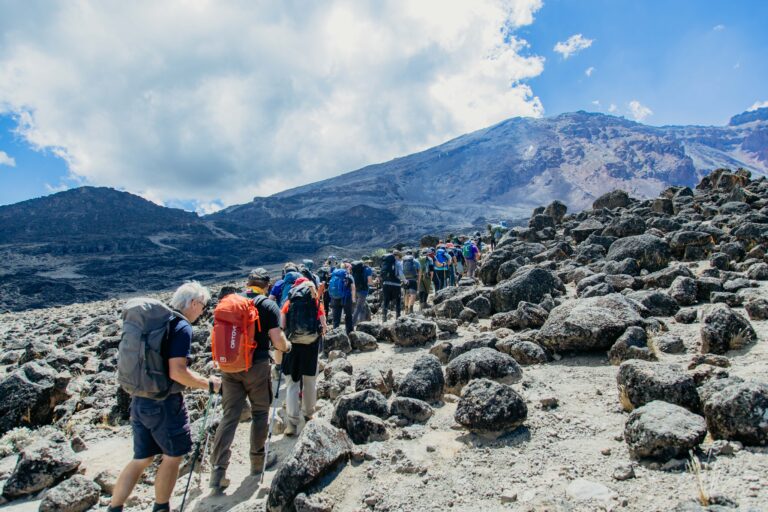
Day two climbs out of the forest into heather and moorland, onto the western edge of the Shira Plateau. Day three crosses the plateau to Shira 2 Camp (3,900 m), with wide views of Kibo ahead. The slow gain over these first days helps acclimatisation.
Machame
Machame starts closer to Moshi. Day one is a steady climb through dense rainforest to Machame Camp (about 3,000 m). Day two is steeper, rising onto the Shira ridge to Shira 2 Camp. The altitude gain is faster than on Lemosho, and Machame is the busiest camping route, so expect other groups at each camp.
From Shira onwards: the shared route
From Shira 2 Camp, both routes follow the same path:
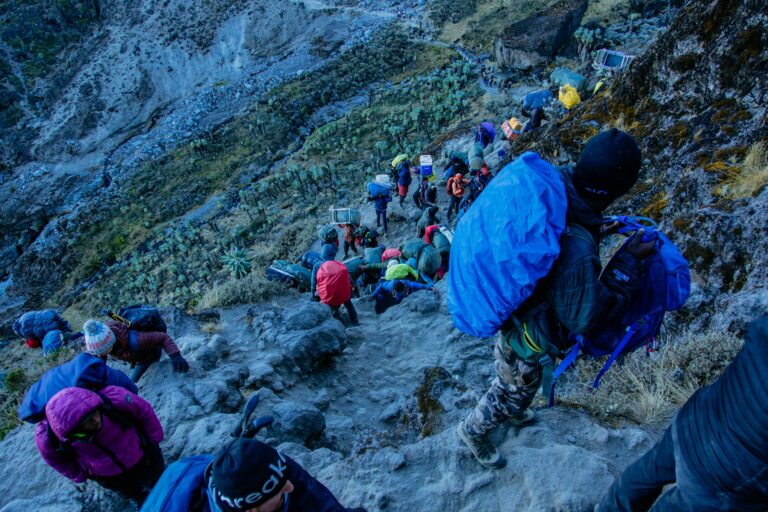
- Shira 2 to Barranco: up to the Lava Tower (about 4,600 m) and down to Barranco Camp (3,960 m). A key acclimatisation day.
- Barranco Wall: a short scramble up a rock face, using hands in places. It looks steep but is safe with your guide.
- Karanga Camp (3,963 m): on 7 and 8-day versions, you stay here, which splits the walk to high camp.
- Barafu Camp (4,640 m): high camp. You rest in the afternoon and leave for the summit around midnight.
- Summit: Stella Point on the crater rim, then Uhuru Peak (5,895 m) near sunrise.
- Descent: back through Barafu to Millennium or Mweka Camp, and out through Mweka Gate the next morning.
Acclimatisation and success rate
Lemosho has an advantage here. The extra days at the start mean you reach Shira 2 Camp after three nights instead of two. On the 8-day version, there is also a night at Karanga. Our Lemosho climbers reach Uhuru Peak 95% of the time.
Machame on 7 days is also a good acclimatisation profile, because of the climb-high-sleep-low day at the Lava Tower and the Karanga night. The 6-day Machame skips Karanga and goes from Barranco straight to Barafu, which is a long day and gives less time to adjust.
Scenery
Both routes pass through all of Kilimanjaro’s climate zones: rainforest, heath and moorland, alpine desert and the arctic summit zone. Lemosho adds the full crossing of the Shira Plateau, one of the widest views on the mountain. Machame climbs more steeply through forest and reaches the open plateau sooner.
Crowds
Machame is the most used route on the southern side. In peak months (January to March and June to October), camps can be busy. Lemosho is quiet for the first two or three days, then joins Machame at Shira and shares the same camps.
Cost
Lemosho costs more mainly because it is longer. Each extra day adds park fees, crew wages and food, and the drive to Lemosho Gate is longer. The difference between a 7-day Lemosho and a 7-day Machame is small. The difference between 6-day Machame and 8-day Lemosho is larger but often worth it for first-time climbers.
Which one should you choose?
Choose Lemosho if:
- This is your first time at high altitude.
- You want quiet trails at the start.
- You can take 8 days on the mountain.
- You want the best chance of reaching the summit.
Choose Machame if:
- You have less time and want a strong route in 6 or 7 days.
- You have been at altitude before without problems.
- You want to keep costs lower.
- You do not mind sharing camps with other groups.
If you want even more time and fewer people, look at the 9-day Northern Circuit. It follows Lemosho to Shira and then circles the quieter north side.
Frequently asked questions
Is Lemosho harder than Machame?
No. Lemosho is longer but more gradual. Many climbers find it easier because the altitude gain is spread over more days.
Do Lemosho and Machame use the same summit route?
Yes. Both summit from Barafu Camp via Stella Point to Uhuru Peak and descend through Mweka Gate.
Is the Barranco Wall dangerous?
It looks steep, but it is a scramble on a well-used path. Guides help where needed. No climbing experience is required.
Which route has better views?
Lemosho, slightly, because of the full Shira Plateau crossing. After Shira, the views are the same.
Can I do Lemosho in 6 days?
We do not recommend it. Lemosho in fewer than 7 days removes the acclimatisation benefit that makes the route worthwhile.
Trips you can book
Articles on Ahsante Tours are written by our team in Moshi and checked by our guides, in line with our Editorial Policy.

Want help planning your trip?
Our team in Moshi plans Kilimanjaro climbs, safaris, cycling tours and Zanzibar stays. Tell us your dates and we will suggest a route and price.