
How Long Does It Take to Climb Kilimanjaro? Days by Route
 By
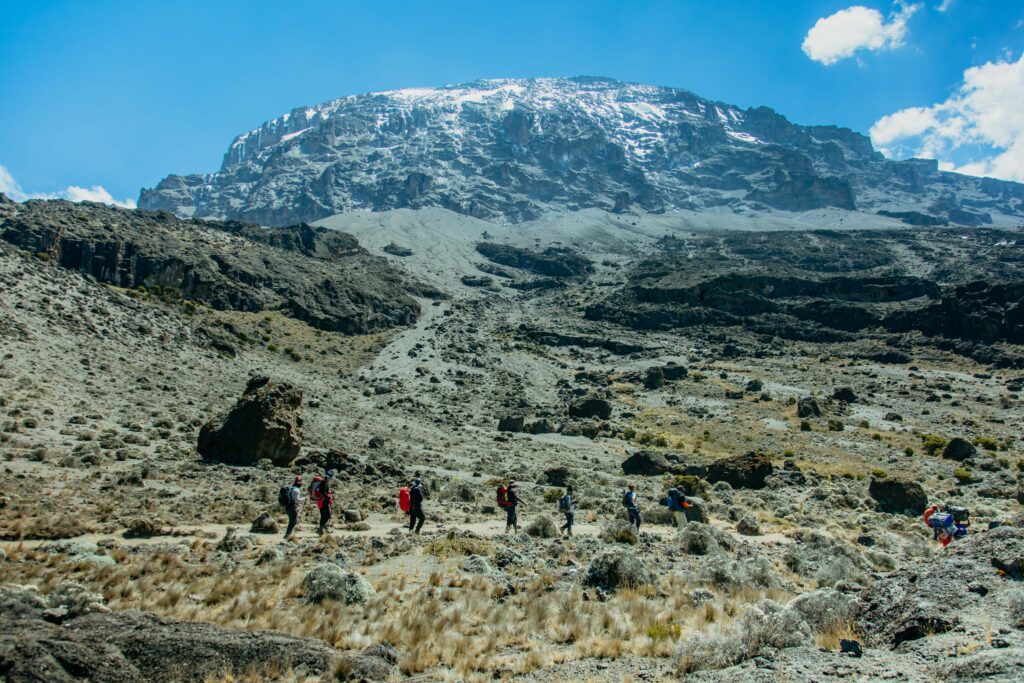
The short answer: most people spend between 6 and 9 days on Kilimanjaro, and the whole trip from landing at Kilimanjaro International Airport to flying home takes 8 to 11 days. The exact number depends on the route you choose and how many acclimatisation days are built into it.
That range matters more than it first appears. Kilimanjaro is 5,895 m high, and the main reason climbers turn back is altitude, not fitness. Every extra day on the mountain gives your body more time to adjust, and the summit success rate rises with it. Below we go through each route, how long it takes, and how to decide what length is right for you.
How many days on each route
There are seven main routes up Kilimanjaro. Each has a standard length and, for most, a longer version with an extra acclimatisation day.
| Route | Days on the mountain | Start gate | Descent |
|---|---|---|---|
| Marangu | 5 or 6 | Marangu Gate | Marangu Gate |
| Machame | 6 or 7 | Machame Gate | Mweka Gate |
| Umbwe | 6 or 7 | Umbwe Gate | Mweka Gate |
| Rongai | 6 or 7 | Rongai Gate | Marangu Gate |
| Lemosho | 7 or 8 | Lemosho Gate | Mweka Gate |
| Northern Circuit | 9 | Lemosho Gate | Mweka Gate |
| Shira | 7 or 8 | Shira Gate | Mweka Gate |
Add one night in Moshi before the climb (for the briefing and gear check) and one night after it, and you have the total trip length. A 7-day Lemosho climb is a 9-day trip from arrival to departure.
Why the number of days matters
At the summit, the air holds roughly half the oxygen available at sea level. Your body can adapt to this, but adaptation takes time. It produces more red blood cells, breathes faster and deeper, and adjusts the chemistry of the blood. None of this happens overnight.
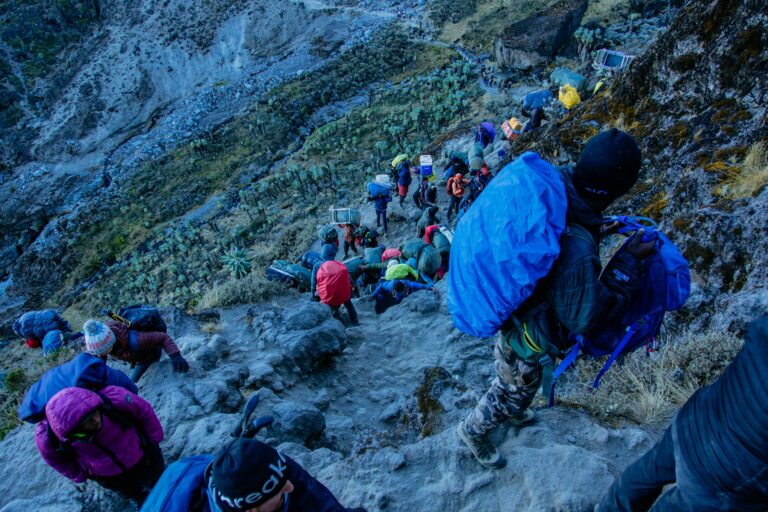
Guides use a principle called “climb high, sleep low”. On a good itinerary you walk up to a higher point during the day and then drop down to sleep. The day from Shira 2 Camp to Barranco Camp on the Machame and Lemosho routes is the classic example: you climb to the Lava Tower at about 4,600 m, then descend to sleep at 3,960 m.
Short itineraries skip some of this. A 5-day climb gains altitude quickly and has no spare day, which is why its summit success rate is lower than on 7 to 9 day routes. Across the routes we run, the pattern is consistent: the longer the itinerary, the more climbers reach Uhuru Peak.
Summit success by length
Our Lemosho climbs have a 95% summit rate. The 9-day Northern Circuit, the longest route, is similar or higher because of its slow altitude gain around the north side of the mountain. Five-day climbs on Marangu do noticeably worse, and most of the people who turn back on short climbs do so because of altitude symptoms on summit night.
The routes in more detail
Marangu: 5 or 6 days
Marangu is the only route with hut accommodation instead of tents, and the only one that goes up and down the same path. Climbers sleep in shared A-frame huts at Mandara, Horombo and Kibo. The 5-day version is the shortest way to the summit, but the gain from Horombo to Kibo Hut and then to the summit comes quickly. We recommend the 6-day version, which adds an acclimatisation day at Horombo with a walk towards Zebra Rocks or Mawenzi.
Machame: 6 or 7 days
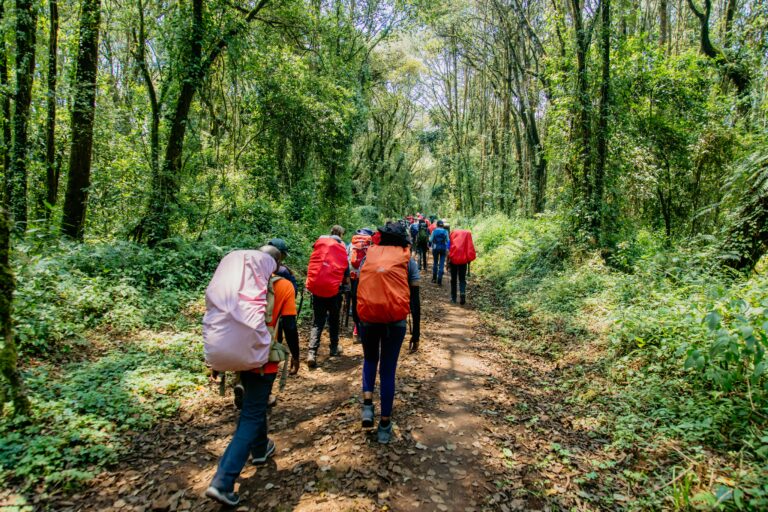
Machame is the most popular camping route. It starts in rainforest on the southern slopes, crosses the Shira Plateau, passes the Lava Tower and climbs the Barranco Wall before the summit push from Barafu Camp. The 6-day version is common, but the 7-day version adds a night at Karanga Camp, which splits a long day and gives more rest before summit night.
Umbwe: 6 or 7 days
Umbwe is the steepest and most direct route. The first two days climb sharply through forest on a narrow ridge. It joins the Machame route near Barranco. It suits experienced hikers who have been at altitude before. We do not usually recommend it as a first high-altitude climb.
Rongai: 6 or 7 days
Rongai approaches from the north, near the Kenyan border. It is drier than the southern routes, which makes it a good choice in the rainy months, and it is quieter. The descent is on the Marangu path. The 7-day version includes a night at Mawenzi Tarn, below the jagged peak of Mawenzi.
Lemosho: 7 or 8 days
Lemosho starts on the western side and crosses the full width of the Shira Plateau before joining Machame. It is quiet for the first two days, has varied scenery and a gradual altitude profile. The 8-day version is what we recommend to most first-time climbers who can take the time.
Northern Circuit: 9 days
The Northern Circuit follows Lemosho to Shira, then turns north and circles the mountain on the less-used northern slopes before summiting from School Hut or Barafu. It is the longest route, with the most time to acclimatise and the fewest other groups on the trail.
How long each day is
Most days on Kilimanjaro involve 4 to 7 hours of walking. Pace is slow on purpose; guides repeat “pole pole” (slowly, slowly) throughout the climb. A typical day starts with breakfast around 7:00, walking from 8:00, lunch on the trail or at the next camp, and arrival at camp in the early or mid afternoon.
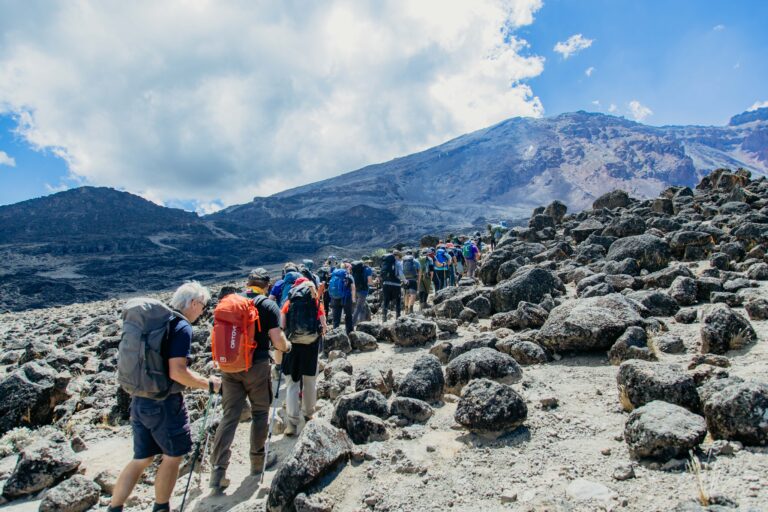
Summit day is the exception. You leave Barafu Camp (4,640 m) or Kibo Hut around midnight and walk 6 to 8 hours to Uhuru Peak, arriving near sunrise. After time at the top, you descend 3 to 4 hours back to high camp, rest, and continue down to a lower camp such as Mweka or Millennium. In total that day can be 12 to 15 hours on your feet.
How to choose the right length
Think about three things: your experience at altitude, how much time you have, and your budget.
- First time above 4,000 m: choose 7 days or more. Lemosho 8 days or the Northern Circuit give the best chance.
- Hiked at altitude before, with good results: a 6 or 7-day Machame or Rongai is a reasonable choice.
- Short on time: the 6-day Marangu is the shortest route we recommend. Climbing Mount Meru (4,566 m) for 3 or 4 days before Kilimanjaro is another way to pre-acclimatise.
- Budget: each extra day adds park fees, staff wages and food. The difference between a 6 and 8-day climb is usually a few hundred US dollars per person. Compared with the cost of the whole trip, it is a small amount for a better chance of reaching the top.
Adding time before and after
Most climbers fly into Kilimanjaro International Airport (JRO), about an hour from Moshi. Plan to arrive at least one day before your climb starts. The briefing with your guide, the gear check and a good night’s sleep all make a difference. If you are coming from a long-haul flight, a second night helps with jet lag.
After the climb, many people add a safari in Tarangire, Ngorongoro or the Serengeti, or a few days on Zanzibar. Your legs will be tired, and sitting in a safari vehicle or on a beach is a good way to recover. If you plan to do this, book it together with the climb so the transfers line up.
Our recommendation
If you can, take 7 or 8 days on the mountain. The extra cost is modest, the walking days are shorter and more comfortable, and the chance of standing on Uhuru Peak is higher. Our team in Moshi can help you pick a route based on the month you want to travel and your experience. Send us your dates and we will suggest the route and length that fits.
Frequently asked questions
Can I climb Kilimanjaro in 5 days?
Yes, on the Marangu route. It is the shortest option, but it has a lower summit success rate because there is less time to acclimatise. If you only have 5 days, consider adding a night on Mount Meru or in the highlands first.
What is the longest route up Kilimanjaro?
The Northern Circuit, at 9 days on the mountain. It is also the quietest route and one of the best for acclimatisation.
How many hours a day do you walk on Kilimanjaro?
Usually 4 to 7 hours. Summit day is longer, often 12 to 15 hours including the descent.
Does a longer climb mean harder walking?
No. Longer itineraries spread the altitude gain over more days, so each day is easier. The extra days make the climb more comfortable, not more tiring.
How long should I stay in Tanzania in total?
For a climb alone, plan 9 to 11 days including travel. If you want to add a safari, allow 13 to 16 days.
Trips you can book
Articles on Ahsante Tours are written by our team in Moshi and checked by our guides, in line with our Editorial Policy.

Want help planning your trip?
Our team in Moshi plans Kilimanjaro climbs, safaris, cycling tours and Zanzibar stays. Tell us your dates and we will suggest a route and price.